Incorporating Indigenous intelligence
Shaping ethical AI through collaboration

In 2023, as the world grappled with headlines on ChatGPT, TELUS committed to incorporating Indigenous perspectives into its well-established data ethics and artificial intelligence (AI) strategy and began engagements and workshops to listen and learn. TELUS’ Indigenous Advisory Council challenged the organization to consider the impacts of emerging generative AI tools on the art and culture of Indigenous Peoples.
In response to the feedback, TELUS declared it will not use AI to create or replicate the art or imagery of Indigenous Peoples as an extension of the organization’s long-standing commitment to artistic integrity in 2024.
Bringing this commitment to life has meant continuous learning about the role team members have when it comes to respecting Indigenous data sovereignty, including changing our approach to how and why we use AI, along with how we implement guardrails and governance to uphold our declaration within our systems.
Our learning process leverages the strengths and services of aligned partners in the AI space, including working with PLATO to “purple team” our AI tools to test how well they hold up to our data ethics standards and commitments.
These insights are woven into TELUS’ human-centric data ethics principles that form the foundation for the organization’s world-leading responsible AI program.
TELUS is currently collaborating with a member of their TELUS Indigenous Advisory Council, Shani Gwin. Gwin is a descendant of Michel First Nation, a member of the Métis Nation of Alberta and Founder and CEO of pipikwan pêhtâkwan. Advocating for building technology that values our relationships with people, animals and the environment, Gwin recognized the opportunity to influence the evolution of AI.
Gwin shared how important it is that AI reflects Indigenous matriarchal perspectives and supports data collection from sources directly connected to Indigenous communities.
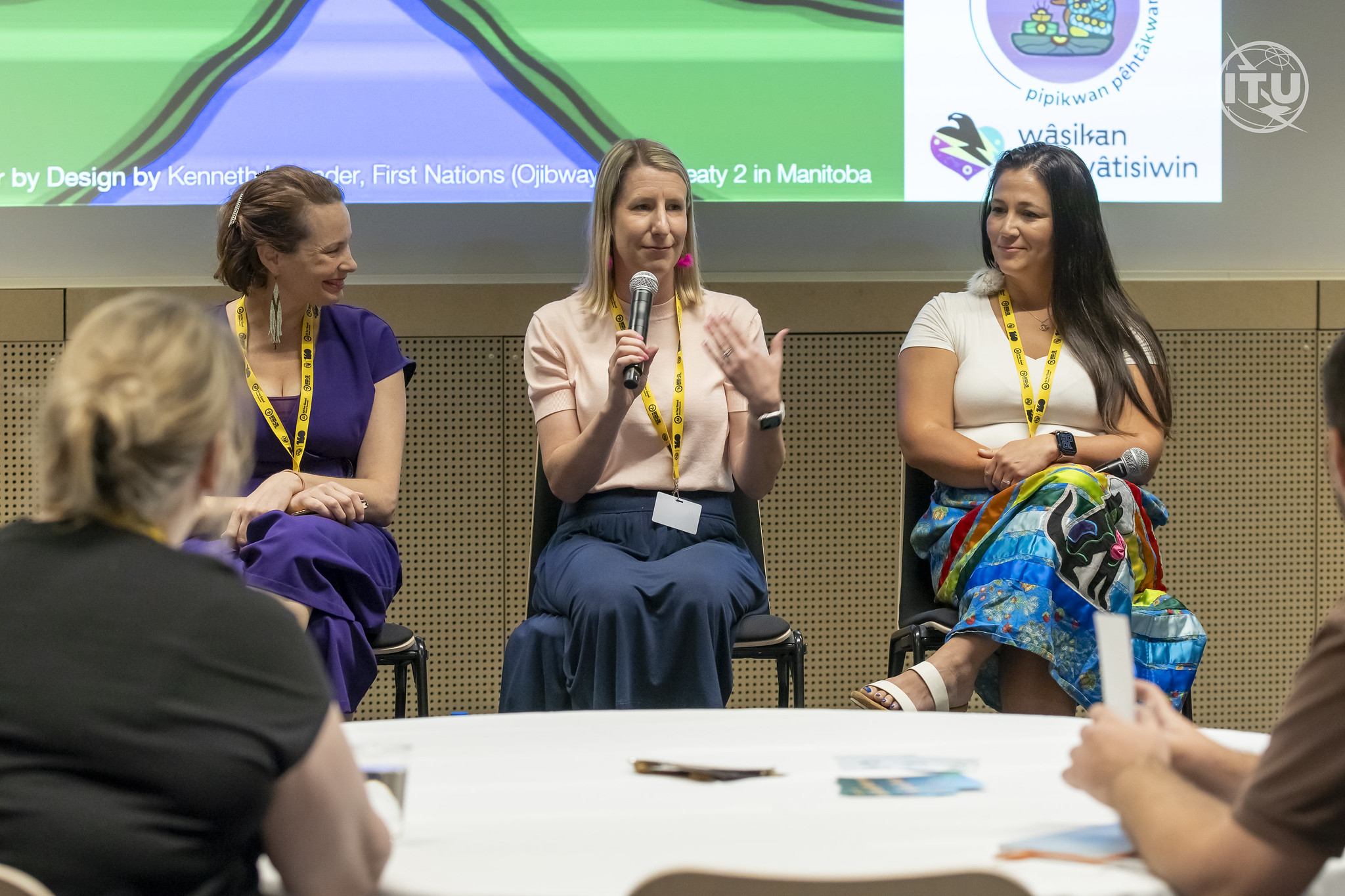
In July 2025, TELUS and pipikwan pêhtâkwan brought this perspective to the global stage at the United Nations AI for Good Global Summit in Geneva, Switzerland. TELUS’ Jesslyn Dymond (Director of AI Governance & Data Ethics) and Marissa Nobauer (Director of Reconciliation, Community Engagement & External Relations) stood alongside Gwin for a workshop titled “Crafting ethical AI with Indigenous intelligence: Partnering with Indigenous Peoples for innovative solutions,” the sole session exploring the role of Indigenous Peoples at the Global Summit.
This initiative reflects the potential of AI, highlighting the value of incorporating Indigenous voices and perspectives. By fostering partnerships that integrate Indigenous intelligence into technology development, AI innovation benefits all communities while respecting Indigenous Rights and Knowledge systems.
“We have the opportunity to build a system that benefits everyone. To achieve this, we need to be innovative in our thinking by forming different types of partnerships and adopting new ways of doing, to ensure AI understands how unique and special each of us is. I believe setting a new standard of inclusive technology is not only possible, but crucial. Building AI from a matriarchal Indigenous perspective will ensure this critical piece of infrastructure is focused on kindness, belonging, fairness and accountability. This system must be built to benefit humanity rather than perpetuate harm.”
Shani Gwin, Métis Nation of Alberta and Michel First Nation, TELUS Indigenous Advisory Council member